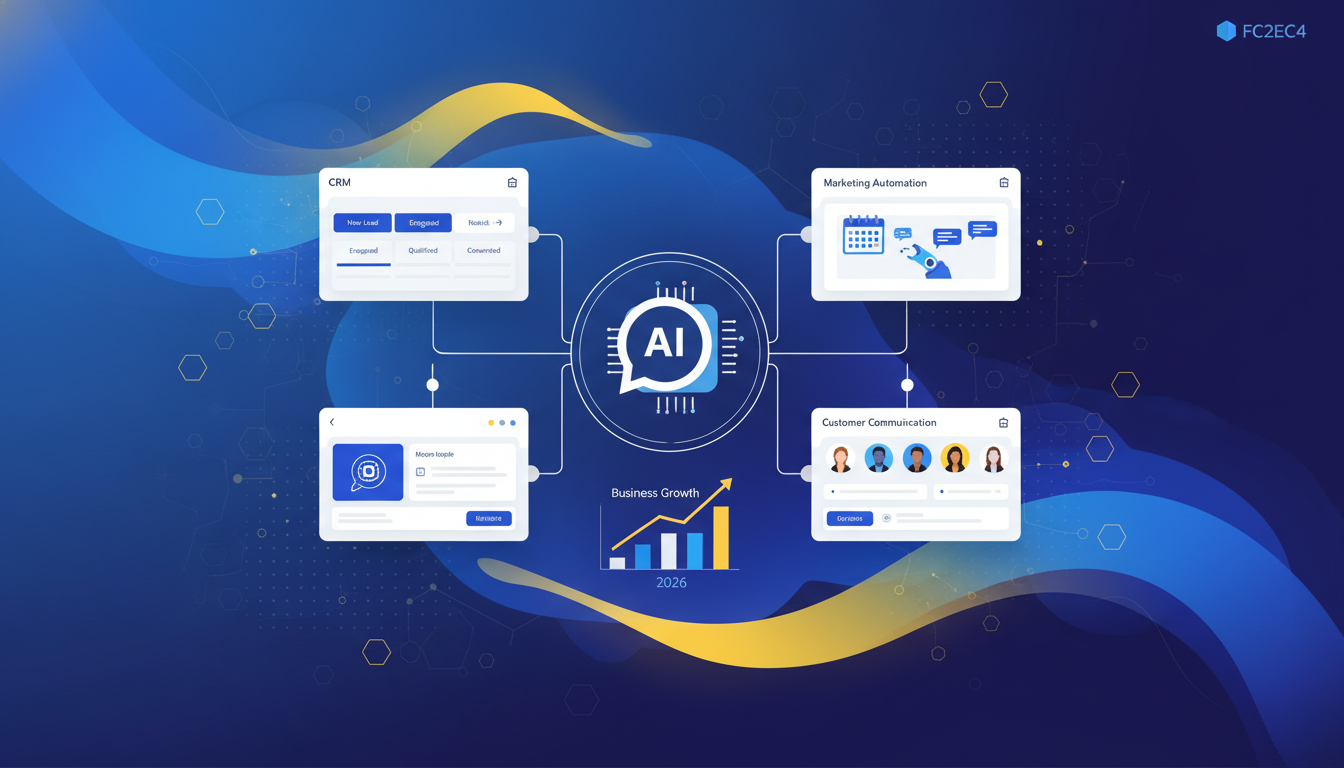
In 2026, customer communication is no longer just about sending messages; it is about building automated, high-converting conversational experiences. WhatsApp has cemented its position as the ultimate channel for business-to-consumer interactions, boasting open rates of up to 98% and response rates that dwarf traditional email and SMS.
However, for enterprise brands, growing startups, and mid-sized businesses, scaling these communications requires the WhatsApp Business API (also known as the WhatsApp Business Platform). Unlike the free WhatsApp Business App designed for local micro-merchants, the API allows for deep CRM integrations, AI-powered chatbots, multi-agent support desks, and high-volume marketing automation.
But with advanced capabilities comes a structured pricing model. Meta’s WhatsApp Business API pricing is conversational, multi-tiered, and varies by country, category, and entry point. If you do not understand how these variables interact, your monthly bill can scale faster than your return on investment (ROI).
This comprehensive guide breaks down the complete WhatsApp Business API pricing structure for 2026, outlines the key updates, and provides a clear strategy to optimize your conversational expenses using tools like Messlo.
—
1. Key Challenges in Understanding WhatsApp API Pricing
For many decision-makers, marketers, and IT managers, wrapping their heads around Meta’s pricing model can feel like deciphering a complex financial derivative. Here are the primary challenges businesses face:
- The Shift in Conversation Categories: Meta does not charge a flat rate per message. Instead, they charge per “conversation window.” Over the years, Meta has refined these definitions, breaking business-initiated messages into specific, strictly enforced categories (Marketing, Utility, Authentication). Misclassifying a message can result in unexpectedly high costs.
- Regional Rate Variations: A marketing conversation sent to a user in India has a vastly different cost compared to one sent to Germany, Brazil, or the United States. Businesses running global campaigns must constantly calculate regional cost variances.
- BSP Markups vs. Direct Cloud API Costs: Many Business Solution Providers (BSPs) act as middle-men, adding a per-message or per-conversation markup on top of Meta’s base rates. This makes budgeting unpredictable.
- Managing the 24-Hour Session Window: Customer support teams must resolve tickets within strict 24-hour windows. If a support conversation drifts into a second day because of delayed agent responses, the business is charged for a brand-new conversation.
- Predicting ROI on Automated Workflows: When implementing AI chatbots or automated lead nurture sequences, mapping out the exact number of user-initiated and business-initiated conversation cycles is complex but crucial for maintaining a healthy profit margin.
—
2. Why Businesses Must Care About WhatsApp API Costs in 2026
Ignoring your conversational communication costs is a fast track to margin erosion. In 2026, several macroeconomic and technological trends make WhatsApp API cost management a C-suite priority:
The Rising Cost of Traditional Channels
SMS pricing continues to climb globally due to carrier fee increases, spam filtration charges, and rising international termination rates. In contrast, WhatsApp provides rich media (images, PDFs, interactive buttons, quick replies) at a fraction of the cost of global MMS or international SMS, making it the more cost-effective choice for interactive communication.
The AI Agent Revolution
With AI Agents now resolving up to 80% of customer inquiries without human intervention, the speed at which customer support operates has accelerated. However, if your AI agent is poorly configured and triggers excessive outbound templates or fails to close issues within a single service window, automation can accidentally drive costs up instead of down.
Maximizing Conversational Commerce Revenue
WhatsApp is no longer just a support channel. It is a full-funnel revenue driver. Marketers using WhatsApp for abandoned cart recovery, product launches, and seasonal promos need to know exactly what each broadcast costs to calculate their exact Return on Ad Spend (ROAS) and Customer Acquisition Cost (CAC).
—
3. Step-by-Step Guide: How WhatsApp Business API Pricing Works in 2026
Meta uses a Conversation-Based Pricing (CBP) model. You are charged per 24-hour conversation session, not per individual message sent back and forth. Within this 24-hour window, you and your customer can exchange an unlimited number of messages at no extra cost, provided they fall within the same conversation category.
Let’s break down the mechanics of this pricing structure step-by-step.
Step 1: Understand the 24-Hour Conversation Window
A conversation officially begins when a message is delivered to a customer. This triggers a 24-hour session window. All messages exchanged between the business and the customer within this window are covered by a single, one-time charge.
If the business messages the user again after the 24 hours have elapsed, a new conversation window is opened, and a new charge is incurred.
Step 2: Know the Four Conversation Categories
Meta separates conversations into four distinct categories. The category determines the pricing tier. Three are business-initiated (requiring pre-approved message templates), and one is user-initiated (service-based).
| Category Name | Initiator | Description & Use Cases | Pricing Tier (Relative) |
|---|---|---|---|
| Marketing | Business | Promotions, offers, discount codes, personalized product recommendations, abandoned cart alerts, or any message that is not utility or authentication. | Highest Cost |
| Utility | Business | Transaction confirmations, order tracking details, delivery updates, billing statements, appointment reminders, and post-purchase follow-ups. | Medium Cost |
| Authentication | Business | One-time passwords (OTPs), verification codes, security alerts, and account recovery verification steps. | Lowest Business-Initiated Cost |
| Service | User | Any conversation that begins with a customer inquiry (e.g., support requests, product questions). The charge is triggered only when the business replies. | Lowest Overall Cost |
Step 3: Analyze Regional Pricing Structure
Meta charges different rates depending on the country code of the recipient’s phone number. This means that if your business is based in the UK, but you send a marketing message to a customer in India, you pay the India rate. Conversely, if you send that same message to a customer in France, you pay the France rate.
Here is an illustrative comparison of approximate rates (rates fluctuate slightly based on Meta’s quarterly currency adjustments and specific market updates):
- North America (US & Canada): Highly competitive, uniform pricing across all business categories, making it very affordable for high-volume outreach compared to premium SMS.
- Western Europe (e.g., Germany, France): Higher rates, particularly for Marketing conversations. Strategy must prioritize targeted, high-value segmentation.
- Latin America (e.g., Brazil, Mexico): Moderate rates. WhatsApp is the primary digital communication tool here, yielding some of the highest conversion rates globally.
- Asia-Pacific (e.g., India): Highly optimized rates for Utility and Authentication due to the massive volume of transactional and OTP operations managed in this region.
Step 4: Understand the Free Tier and Free Entry Points
Meta offers specific cost-saving relief valves that every business should leverage to maximize their budget:
- The 1,000 Free Service Conversations Monthly: Each WhatsApp Business Account (WABA) receives 1,000 free Service (user-initiated) conversations per month. This allows small businesses to handle customer support completely free of charge. Note: Business-initiated conversations (Marketing, Utility, Authentication) do not count toward this free tier.
- Free Entry Point Conversations (72-Hour Window): When a user initiates a conversation by clicking on a Click-to-WhatsApp Ad (running on Facebook or Instagram) or a Call-to-Action button on a Facebook Page, Meta waives the conversation charge. Furthermore, the standard 24-hour window is extended to a 72-hour free window. During this period, all messages sent by the business—including marketing broadcasts—are completely free.
Step 5: Cloud API Direct vs. BSP Markups
There are two primary ways to access the WhatsApp Business API:
- Meta Cloud API (Direct): Meta hosts the API on their cloud servers. There are no server maintenance or hosting charges. You pay Meta’s exact, raw conversation rates.
- On-Premises API / Traditional BSPs: Legacy Business Solution Providers route messages through their own servers and often charge a per-message markup (ranging from $0.002 to $0.02 per message) or charge steep set-up and monthly platform fees.
The Messlo Advantage: By choosing a modern customer engagement platform like Messlo, you integrate directly with the Meta Cloud API. This means you completely bypass third-party message markups. Messlo charges a transparent, flat platform subscription, allowing you to pay Meta’s raw API costs directly, saving you up to 40% on monthly communication bills compared to legacy BSPs.
—
4. Best Practices for Cost Optimization on WhatsApp
Uncontrolled broadcasts can rapidly inflate your monthly invoice. Follow these industry-proven best practices to keep your conversational marketing and support costs highly optimized.
1. Master the Art of Template Classification
Meta’s automated systems analyze your outbound templates. If you submit a template designed for cart recovery but label it as a “Utility” template to save money, Meta will reject it or reclassify it as “Marketing.”
- Ensure transactional updates do not contain promotional language (e.g., do not add “Use code SAVE10 for your next purchase” to a shipping notification template). Keep Utility templates strictly factual to secure lower utility rates.
2. Deploy Smart AI Chatbots to First-Contact Resolve
If a customer messages your support channel (initiating a Service conversation), you are charged a single fee. If a human agent takes 30 hours to respond because of weekend backlogs, that single support issue will bleed into a second 24-hour window, doubling your cost.
- Use Messlo’s integrated AI Chatbots and AI Agents to instantly triage, answer, and resolve customer questions within minutes of the initial outreach. Resolving support queries instantly ensures you never pay for secondary conversation windows.
3. Hyper-Segment Your Broadcast Audiences
Do not blast your entire database with Marketing templates. WhatsApp is a high-engagement, personal inbox. Sending unsegmented promotional broadcasts leads to spam reports, phone number quality downgrades, and wasted spend.
- Segment your audience inside your CRM. Target abandoned-cart messages only to active carts from the last 24 hours. Send loyalty promotions only to repeat purchasers. High personalization means higher conversion rates, offsetting the marketing conversation cost.
4. Leverage Click-to-WhatsApp Ads Strategically
If you are running paid acquisition campaigns on Meta (Facebook & Instagram), route the traffic directly to WhatsApp instead of an external landing page.
- Not only do you capture a high-intent lead immediately inside their chat inbox, but you also unlock a 72-hour free messaging window. This gives your sales team and automated workflows three full days to qualify, nurture, and close the lead without paying Meta a single conversation fee.
5. Consolidate Multiple Notifications
Instead of sending three separate Utility messages (one for “Order Confirmed,” one for “Payment Processed,” and one for “Package Packaged”) over two days, combine them where logical. Or, ensure they are sent within the same 24-hour window so they are covered under a single Utility conversation charge.
—
5. Common Mistakes to Avoid
Avoid these frequent pitfalls to protect your WhatsApp business sender reputation and marketing budget:
- Failing to Monitor Quality Rating: If you send low-quality marketing broadcasts, users will block or report your number. If your quality rating falls to “Low,” Meta will restrict your messaging tier (e.g., capping you at 250 or 1,000 business-initiated conversations per day), crippling your scale.
- Underutilizing Quick Replies and Call-to-Action Buttons: Sending plain text templates results in lower engagement. Using interactive buttons increases CTR (Click-Through Rates), ensuring that when you do pay for a marketing conversation, you achieve maximum engagement.
- Ignoring the 24-Hour Session Timer in CRM Integrations: If your sales team manually sends non-template messages to customers outside the 24-hour window, the API will block the message delivery. Sales reps must be prompted by your CRM to send a pre-approved template first to reopen the conversation window.
- Paying High BSP Per-Message Fees: Many providers mask high per-message markup costs inside complex packages. Always calculate the total cost of ownership (TCO) by separating platform subscription fees from Meta’s direct network fees.
—
6. Real-World Cost Calculation Examples
To understand exactly how these charges play out, let’s look at three realistic business scenarios. For these examples, we will use hypothetical, rounded global averages to illustrate the math.
Scenario A: E-Commerce Store Driving Sales (Marketing Broadcast)
An e-commerce brand wants to run a seasonal promotion targeting 10,000 customers in a market where a Marketing Conversation costs $0.07 and a Service Conversation costs $0.03.
- The brand sends the promotion template to 10,000 opted-in customers.
Calculation: 10,000 x $0.07 = $700.00 - Out of those, 1,200 customers reply within the 24-hour window with product questions.
Calculation: $0.00 (Since the marketing conversation window is already open and paid for, all replies and follow-ups within that 24-hour window are free). - Total Meta API Cost: $700.00
Scenario B: Logistics Company Managing Deliveries (Utility Updates)
A logistics firm sends delivery updates to 50,000 customers per month in a market where a Utility Conversation costs $0.02.
- 50,000 order delivery confirmation templates are delivered.
Calculation: 50,000 x $0.02 = $1,000.00 - 5,000 customers reply asking to change their delivery address, triggering customer support interactions. Because the customer replies, these remain within the active utility window if resolved within 24 hours.
Calculation: $0.00 (Covered under the existing utility window). - Total Meta API Cost: $1,000.00
Scenario C: High-Volume Customer Support Desk
A SaaS company handles 15,000 customer-initiated service queries a month in a region where a Service Conversation costs $0.015.
- The first 1,000 service conversations are free under Meta’s monthly free allowance.
Calculation: 1,000 x $0.00 = $0.00 - The remaining 14,000 service conversations are handled by customer service agents.
Calculation: 14,000 x $0.015 = $210.00 - However, due to slow response times on weekends, 1,500 of those conversations run past the 24-hour mark, requiring agents to send templates to re-engage, starting a new service window.
Calculation: 1,500 x $0.015 = $22.50 - Total Meta API Cost: $232.50
—
7. Industry-Specific Pricing Use Cases
Let’s look at how different industries leverage the WhatsApp Business API pricing structure to maximize their bottom line.
1. Real Estate & Property Development
The Strategy: Real estate firms use Click-to-WhatsApp ads to showcase premium properties on Instagram. When a prospect clicks the ad, they enter a 72-hour free window.
The Workflow: An automated AI agent on Messlo immediately shares brochure PDFs, collects budget requirements, captures contact details, and schedules a phone call with a human agent. By qualifying the lead entirely within the free 72-hour window, the acquisition cost per lead is drastically minimized.
2. Healthcare Clinics & Hospitals
The Strategy: Medical clinics rely heavily on Utility templates to reduce missed appointments (no-shows), which cost the industry billions annually.
The Workflow: 48 hours before an appointment, Messlo automatically triggers a Utility conversation containing the appointment details and a “Confirm” or “Reschedule” quick-reply button. If the patient clicks reschedule, an automated routing flow immediately suggests new times—all completed within a single Utility billing session.
3. BFSI (Banking, Financial Services & Insurance)
The Strategy: Secure customer verification and high-speed notifications are critical. Financial institutions prioritize Authentication and Utility templates.
The Workflow: To secure transaction sign-offs, banks trigger instantaneous, low-cost Authentication OTP messages. Once verified, details of the bank balance update are delivered via a Utility template. By utilizing API-driven messaging, banks save significantly compared to unstable, premium international SMS carriers.
4. Retail and E-Commerce Brands
The Strategy: E-commerce brands use targeted Marketing templates to reclaim lost revenue.
The Workflow: When a user abandons a cart, a Messlo automated workflow triggers a Marketing message containing an image of the item and a direct checkout button. Because WhatsApp open rates are so high, the conversion rate of these abandoned cart notifications often exceeds 30%, easily paying back the marketing template cost multiple times over.
—
8. Software and Tools: Why Messlo is the Ultimate Choice for Cost Management
While Meta dictates the baseline conversation rates, the software platform you use to build your workflows, host your database, and run your AI chatbots dictates your operational efficiency and bottom-line costs.
Messlo is built to simplify the complexities of the WhatsApp Business API while keeping your overhead as low as possible.
How Messlo Saves You Money and Eliminates Complexity:
- Zero Message Markups: Unlike older BSPs that charge hidden fees for every single outbound message, Messlo connects your business directly to the Meta Cloud API. You pay Meta’s raw rates directly—no markups, no hidden transaction fees.
- Unified Lead Management & CRM: Track every contact, conversation category, and pipeline stage inside an intuitive interface. Keep your sales, support, and marketing teams aligned without purchasing expensive, disconnected external CRMs.
- Advanced AI Agents & Chatbots: Deflect and resolve queries in real-time. By automating the first-line response, Messlo helps you close customer inquiries within the initial 24-hour service window, saving you from paying for multiple conversation sessions.
- Marketing Automation and Visual Flow Builders: Design and deploy multi-step campaign flows with ease. Target precisely segmented contact lists, schedule templates, and view live conversion analytics so you only spend money on campaigns that yield a positive ROI.
- Seamless Team Collaboration: Manage all chats through a collaborative, shared team inbox. Route conversations automatically to the right human agent based on dynamic routing rules, ensuring lightning-fast resolution times.
—
9. Future Trends for 2026 and Beyond
As we navigate 2026, several key transformations are shaping the future of conversational commerce and WhatsApp’s pricing landscape:
- Utility-to-Marketing Reclassifications: Meta continues to tighten its classification parameters. AI-driven verification systems will scan templates more stringently to ensure businesses do not camouflage marketing copy in utility alerts.
- Wider Adoption of In-App Payments: WhatsApp Pay is expanding into more global regions. Businesses will be able to complete end-to-end sales transactions inside the chat. This capability turns a conversational fee into a direct transaction channel, drastically raising the value-to-cost ratio.
- Deeper Integration of Generative AI Agents: AI agents are transitioning from basic rule-based bots to intelligent partners capable of personalized recommendations. This shift will make Service (user-initiated) conversations highly lucrative, as AI-driven upselling within customer support sessions increases.
—
10. Frequently Asked Questions (FAQs)
A: The WhatsApp Business App is a free mobile app designed for local, micro-businesses with limited message volumes. It runs on a single phone and cannot be automated at scale. The WhatsApp Business API is designed for larger businesses. It supports infinite scaling, AI chatbots, multiple customer service agents, complete CRM integrations, and is priced on a conversation-basis.
A: If you connect directly to Meta’s Cloud API via a platform like Messlo, you will link your credit card to your Meta Business Manager account. Meta will bill you directly for your raw conversation usage. Messlo only bills you for your flat, transparent software platform subscription.
A: No. You are never charged simply when a customer messages you. You are only charged for a “Service Conversation” when your business replies to a user-initiated message, which then starts a 24-hour billing window.
A: Yes. All business-initiated messages (Marketing, Utility, Authentication) require pre-approved message templates. Meta typically reviews and approves templates within a few minutes. User-initiated service conversations do not require any templates.
A: No. Meta’s 1,000 free monthly conversations only apply to Service (user-initiated) conversations. Business-initiated templates (Marketing, Utility, and Authentication) are billed from the very first message.
A: When a user clicks an ad on Facebook or Instagram that directs them to chat with your business on WhatsApp, no conversation fee is charged for that interaction. Furthermore, any message your business sends to that user over the next 72 hours—including marketing template broadcasts—is entirely free.
A: If Meta’s automated validation system detects promotional phrases in a template you submitted as Utility, it will either reject the template or automatically approve it under the Marketing category. You can appeal the decision through your Meta Business Suite if you believe the classification was incorrect.
A: Yes, based on your phone number tier. New API numbers start at Tier 1 (allowing 1,000 unique business-initiated conversations daily). As you send high-quality messages and stay within Meta’s guidelines, your account will automatically scale up to Tier 2 (10,000), Tier 3 (100,000), and ultimately Tier 4 (Unlimited conversations daily).
—
11. Conclusion
Navigating the WhatsApp Business API pricing structure does not have to be overwhelming. By understanding the core mechanics—the 24-hour session window, the four distinct message categories, regional variations, and the immense value of free entry points—you can construct a highly optimized, high-converting conversational engine.
The secret to keeping costs low while scaling engagement lies in choosing the right partner. Avoid legacy BSPs that limit your growth with hidden markups and complicated setups.
By integrating your customer communications with Messlo, you get direct-to-Meta API connectivity with zero markup fees, coupled with a robust CRM, advanced marketing automation, and powerful AI agents. This guarantees that your business saves money, responds faster, and scales seamlessly.
—
Supercharge Your Business Growth with Messlo
Stop overpaying for your WhatsApp communications. With Messlo, you bypass expensive broker markups, unlock direct Meta Cloud API pricing, and easily automate your lead acquisition, customer support, and marketing campaigns in one beautiful dashboard.
Leave a Reply